Spider bites are often misunderstood and sometimes unnecessarily feared. While most spiders are harmless and their bites cause only mild symptoms, a few species can cause serious medical reactions. This guide explains everything you need to know about spider bites — from symptoms and pictures to proper treatment and when to seek medical help.
What Is a Spider Bite?
A spider bite occurs when a spider uses its fangs to inject venom into the skin. Most bites happen accidentally when a spider feels threatened — for instance, if it’s trapped in clothing or bedding. While some bites are painless and go unnoticed, others can trigger visible and uncomfortable symptoms.
Common Symptoms of a Spider Bite
The severity of symptoms depends on the type of spider, the amount of venom injected, and individual reactions. Here are the most common symptoms:
| Symptom | Description |
|---|---|
| Redness and Swelling | Localized skin irritation, similar to a bee sting. |
| Pain or Itching | Mild to moderate discomfort at the bite site. |
| Blister Formation | Some bites can develop small blisters or pustules. |
| Burning Sensation | Especially with venomous spider bites. |
| Muscle Pain or Cramps | Can occur with more dangerous spider bites. |
| Fever or Chills | Sign of systemic reaction or infection. |
| Nausea or Headache | Seen in rare but serious cases. |
Pictures of Spider Bites
⚠️ Important Note: Images are for educational purposes only. Always consult a medical professional for diagnosis.
1. Mild Spider Bite
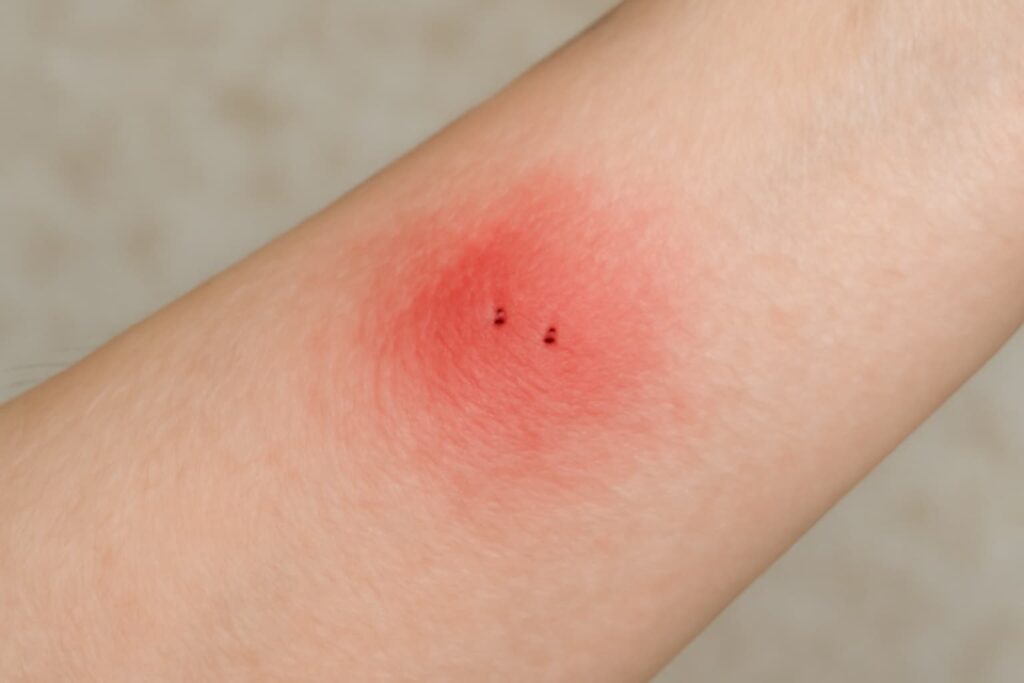
Appearance: Small red bump, slightly raised, may itch or feel warm.
2. Brown Recluse Bite
Appearance: Initially mild, but can develop into a deep ulcer with a dark center and surrounding redness. Necrotic tissue may form.
3. Black Widow Bite
Appearance: Two puncture marks, redness, swelling. May cause severe pain, muscle cramps, and systemic symptoms.
4. Infected Spider Bite
Appearance: Redness spreading outwards, pus-filled, tender to the touch, may feel warm and swollen.
Venomous vs. Non-Venomous Spider Bites
Most spider bites are from non-venomous species and cause only minor irritation. However, a few spiders can cause severe symptoms:
Venomous Spiders to Watch Out For:
| Spider | Region Found | Danger Level |
|---|---|---|
| Brown Recluse | Midwestern and Southern U.S. | High (necrotic wounds) |
| Black Widow | Worldwide, especially Americas | High (neurological effects) |
| Funnel-Web Spider | Australia | Very High (can be fatal) |
| Brazilian Wandering Spider | South America | Extremely High |
What to Do If You Suspect a Spider Bite
✅ Immediate First Aid Steps:
- Clean the bite area with soap and water.
- Apply a cool compress to reduce swelling and pain.
- Elevate the limb if bitten on an arm or leg.
- Take over-the-counter pain relievers like ibuprofen or acetaminophen.
- Use antihistamines to relieve itching.
When to Seek Medical Attention
Seek emergency help if:
- The bite is from a black widow or brown recluse.
- Severe pain, muscle cramps, or vomiting develops.
- The wound spreads, forms an ulcer, or discharges pus.
- Fever, chills, or signs of an allergic reaction (hives, difficulty breathing) occur.
- You are unsure if the bite is from a dangerous spider.
How to Identify a Spider Bite (vs. Other Bites or Skin Issues)
Spider bites can resemble other insect bites, staph infections, or even MRSA. Here’s how to differentiate:
| Condition | Key Differences |
|---|---|
| Mosquito Bite | More itchy than painful; resolves quickly. |
| Bedbug Bite | Appears in clusters or lines; usually bites at night. |
| MRSA Infection | Rapidly spreading redness; pus-filled and warm. |
| Tick Bite | Bulls-eye rash possible; linked to Lyme disease. |
Prevention Tips: How to Avoid Spider Bites
- Shake out clothing and shoes before putting them on.
- Avoid clutter in basements, attics, and sheds where spiders hide.
- Use gloves when gardening or moving firewood.
- Seal cracks and gaps in doors and windows.
- Keep your home clean and free from insects that attract spiders.
Spider Bites in Children and Pets
🧒 In Children
Children may react more intensely to spider bites due to their smaller body size. Symptoms can escalate quickly. Watch for:
- Fever
- Swelling
- Vomiting or lethargy
🐾 In Pets
Cats and dogs can be bitten too, usually on their nose or paw. Symptoms include:
- Limping
- Swelling at the site
- Vomiting or lethargy
Always consult a vet or pediatrician if a child or pet is bitten.
Treatment Options and Recovery Time
Most mild spider bites heal within 7–10 days with basic care. For more serious bites:
| Bite Severity | Treatment | Recovery Time |
|---|---|---|
| Mild | Home care | 1–2 weeks |
| Moderate | Prescription antibiotics or steroids | 2–4 weeks |
| Severe (e.g. Recluse) | Wound care, possibly surgery | 4–8 weeks or longer |
Myths About Spider Bites
- ❌ “All spider bites are dangerous.”
Truth: Most are harmless and don’t require treatment. - ❌ “Spiders often bite humans.”
Truth: Spiders rarely bite unless provoked. - ❌ “Every unknown skin lesion is a spider bite.”
Truth: Many skin infections are wrongly blamed on spiders.
FAQs About Spider Bites
Q: Can I suck out spider venom?
A: No. This is ineffective and can worsen the wound.
Q: Should I try to capture the spider?
A: If it’s safe, yes — it can help with identification and treatment.
Q: Are spider bites contagious?
A: No. The bite itself is not contagious, though secondary infections can spread.
Final Thoughts
Spider bites, while alarming, are usually harmless. Knowing what symptoms to watch for and how to respond can make a big difference. Always monitor the bite, treat it early, and seek help when necessary — especially if it’s from a known venomous spider.
If you’re ever unsure, it’s better to err on the side of caution and consult a healthcare provider. With the right care, recovery is usually smooth and complete.

Education:
NPU (National Pharmaceutical University) 2010-2015, 2015-2016 internship
Work experience:
2010 – 2012 Pharmacy 63 – Production Department
2012 – 2015 Pharmacy 63 – Pharmacist
2015 – 2016 Pharmacy 63 – Pharmacist
2016 – to date Pharmacy UA – Head of Pharmacy