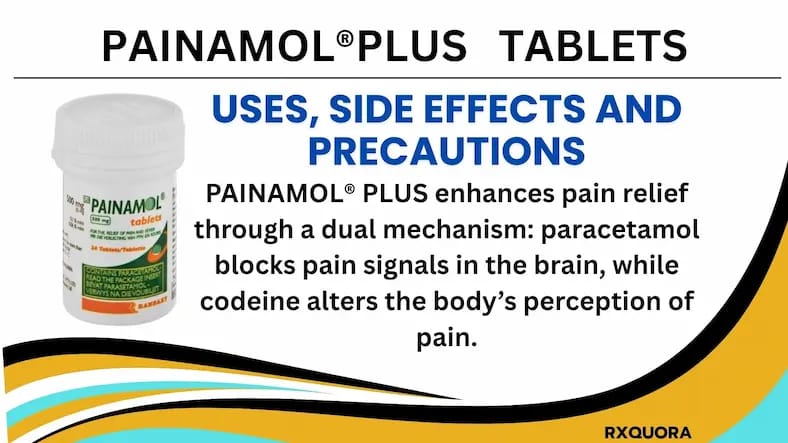
PAINAMOL® PLUS is a Schedule 2 medication in South Africa used for the relief of mild to moderate pain and fever. Whether you’re considering this medicine or currently using it, this guide will help you make informed choices for your health.
What is PAINAMOL® PLUS?
PAINAMOL® PLUS is a combination medicine that contains two active ingredients:
- Paracetamol (500 mg) – a well-known pain reliever and fever reducer.
- Codeine phosphate (8 mg) – a mild opioid used to relieve moderate pain when paracetamol alone is not sufficient.
This combination enhances pain relief through a dual mechanism: paracetamol blocks pain signals in the brain, while codeine alters the body’s perception of pain.
Key Uses:
- Relief of mild to moderate pain such as headaches, toothaches, period pain, muscle aches, or joint pain.
- Reduction of fever (antipyretic effect).
Important Things to Know Before Taking PAINAMOL® PLUS
Although PAINAMOL® PLUS is available without a prescription, it should be used carefully. Misuse or overuse can lead to serious health risks including addiction, liver damage, and respiratory depression.
Do Not Take PAINAMOL® PLUS If:
You should avoid taking PAINAMOL® PLUS if you:
- Are allergic to paracetamol, codeine, or any of the other listed ingredients.
- Have breathing problems, such as asthma or chronic obstructive pulmonary disease (COPD).
- Have recently suffered a head injury with increased pressure in the brain.
- Are an alcoholic.
- Have heart failure resulting from lung disease.
- Are currently using or have recently used monoamine oxidase inhibitors (MAOIs).
- Are pregnant, especially near delivery, as codeine may depress breathing in the newborn.
- Have any condition that predisposes you to dependency or addiction.
Warnings and Precautions:
Use PAINAMOL® PLUS with caution if you:
- Need to take it continuously for more than 10 days — speak with your doctor first.
- Have liver or kidney impairment.
- Have a thyroid disorder (e.g. hypothyroidism).
- Suffer from adrenal gland issues (e.g. Addison’s disease).
- Have enlarged prostate or difficulty urinating.
- Have any intestinal inflammation or obstruction.
- Are elderly or physically weakened.
- Are taking other medications such as antidepressants, sedatives, anaesthetics, or anti-epileptics.
- Are allergic to food dye tartrazine, which may cause allergic reactions.
Interactions With Other Medicines
PAINAMOL® PLUS can interact with several medicines. Always inform your healthcare provider if you are taking:
| Medication Type | Example | Possible Effect |
|---|---|---|
| Diuretics or blood pressure meds | Hydrochlorothiazide | Reduced effectiveness or increased side effects |
| Antipsychotics | Chlorpromazine | Increased risk of sedation |
| Blood thinners | Warfarin | Increased risk of bleeding with long-term use |
| Diarrhoea meds | Loperamide, kaolin | Potential constipation |
| Muscle relaxants | Atropine | Enhanced drowsiness or confusion |
| Anti-epileptics | Carbamazepine, phenytoin | Reduced effect of paracetamol |
| TB treatment | Isoniazid | Liver toxicity |
| Anti-nausea meds | Metoclopramide, domperidone | Altered absorption of paracetamol |
| Antihistamines | Hydroxyzine | Increased sedation |
| Gout medication | Probenecid | Altered clearance of paracetamol |
| Cholesterol reducers | Colestyramine | Reduced effect of paracetamol |
This is not a complete list, so always double-check with a pharmacist or doctor before combining medications.
Use During Pregnancy, Breastfeeding, and Fertility
- Pregnancy: Codeine can affect fetal development and should be avoided, particularly in the later stages of pregnancy. Always consult your doctor first.
- Breastfeeding: Codeine passes into breast milk and can affect your baby, potentially causing breathing issues. Use only if advised by a healthcare provider.
- Fertility: There is no conclusive evidence of effects on fertility, but prolonged opioid use may affect reproductive hormones.
Driving and Operating Machinery
PAINAMOL® PLUS may cause drowsiness, dizziness, or confusion due to the codeine component. Avoid driving or using heavy machinery until you understand how the medication affects you.
Sugar Content Warning
Each tablet contains 20 mg of sucrose, which may be important for people with sugar intolerance or diabetes. If you’ve been told you cannot tolerate certain sugars, consult your doctor before use.
How to Take PAINAMOL® PLUS
Always use PAINAMOL® PLUS exactly as directed on the leaflet or by your doctor or pharmacist. Never exceed the recommended dose.
Recommended Dosage:
| Age Group | Dose | Frequency |
|---|---|---|
| Adults | 1–2 tablets | Every 4–6 hours |
| Children (12+ years) | 1 tablet | Every 4–6 hours |
| Children (6–12 years) | ½–1 tablet | Every 6 hours |
- Do not take more than 8 tablets in 24 hours.
- Do not use continuously for longer than 10 days without consulting a doctor.
- If you feel the medication is too strong or too weak, speak with your doctor or pharmacist.
Missed Dose:
Take the missed dose as soon as you remember. If it’s almost time for your next dose, skip the missed one. Do not double up to make up for a missed dose.
Overdose Warning:
Overdosing on PAINAMOL® PLUS, especially due to the paracetamol component, can cause serious liver damage. Symptoms of overdose may not appear right away but can include nausea, vomiting, confusion, and liver failure.
If an overdose is suspected:
- Call a doctor or poison control center immediately.
- Go to the nearest emergency hospital, even if you feel well initially.
Possible Side Effects
Like all medicines, PAINAMOL® PLUS can cause side effects. Not everyone experiences them, and most are mild and temporary. However, some reactions can be serious and require immediate medical attention.
Serious Side Effects – Seek Urgent Help
- Severe allergic reactions (anaphylaxis): rash, swelling, wheezing, difficulty breathing, chest tightness, collapse.
- Skin disorders: Stevens-Johnson Syndrome, fixed drug eruptions, acute pustular rashes.
- Blood disorders: agranulocytosis (low white cells), thrombocytopenia (low platelets).
- Liver or kidney damage (especially with overdose or prolonged use).
Common Side Effects:
| System Affected | Side Effects |
|---|---|
| Central Nervous System | Drowsiness, dizziness, confusion, restlessness, mood changes |
| Digestive System | Nausea, vomiting, constipation, dry mouth |
| Urinary System | Difficulty urinating, urinary retention |
| Cardiovascular System | Low blood pressure, slow or fast heart rate |
| Skin & Immune System | Rashes, allergic reactions, itching |
| Other | Sweating, drug dependence, withdrawal symptoms upon stopping suddenly |
If any side effect worries you, speak to your doctor or pharmacist right away.
Dependence and Withdrawal Risk
Codeine is a mild opioid and can lead to dependency, especially with prolonged use or high doses. This risk is higher in people with a history of substance abuse. Do not use this medicine for more than 10 days unless directed by a doctor.
Symptoms of withdrawal may include:
- Anxiety
- Irritability
- Nausea
- Sweating
- Muscle aches
- Trouble sleeping
To reduce the risk of withdrawal symptoms, do not stop the medicine suddenly if you have been using it regularly. Speak with a healthcare provider for tapering guidance.
Storage Instructions
To preserve the safety and effectiveness of PAINAMOL® PLUS, store it correctly:
- Store at or below 25°C in a cool, dry place, away from direct sunlight.
- Keep in its original packaging to protect from moisture and damage.
- Keep out of reach of children — this medicine can be dangerous if ingested by a child.
- Do not use after the expiry date on the packaging.
- Return unused medicine to your pharmacist — do not flush it or throw it in the trash or toilet.
Product Description
- Appearance: Flat, yellow-and-red mottled tablets. Scored on one side with a “b” embossed on the other.
- Packaging:
- Blister packs of 20 tablets (2 x 10)
- Containers of 100, 500, 1000 tablets
- Bulk packaging (plastic buckets) of 5000 tablets
- Patient-ready packs in various sizes
Active Ingredients:
| Ingredient | Strength per tablet |
|---|---|
| Paracetamol | 500 mg |
| Codeine phosphate | 8 mg |
Other Ingredients:
- Alcohol 90% v/v
- Gelatin
- Magnesium stearate
- Modified starch
- Povidone
- Sucrose (20 mg)
- Sodium metabisulphite
- Starch maize
- Colorants: be-tabs red C344/TF, yellow saffron LS2002/22
- Purified water
Manufacturer and Registration Details
- Holder of Certificate of Registration:
Ranbaxy Pharmaceuticals (Pty) Ltd
14 Lautre Road, Stormill Ext.1
Roodepoort, 1724
South Africa
Final Thoughts
PAINAMOL® PLUS offers reliable relief from mild to moderate pain and fever through a powerful combination of paracetamol and codeine. However, this medicine must be used responsibly to avoid side effects, dependency, and interactions. Always follow the dosage instructions, avoid prolonged use without consulting a doctor, and seek medical help if anything feels unusual.
If you’re unsure whether PAINAMOL® PLUS is right for you, speak with a healthcare provider. Never share your medication with others and always keep it stored safely.
📚 Sources for PAINAMOL® PLUS
- South African Health Products Regulatory Authority (SAHPRA)
Regulatory agency overseeing medicine safety and approvals in South Africa.
🔗 https://www.sahpra.org.za - Ranbaxy Pharmaceuticals (Pty) Ltd – Manufacturer of PAINAMOL® PLUS
For official product registration, labeling, and ingredients.
🔗 https://www.sunpharma.com/south-africa (Ranbaxy is a division of Sun Pharma) - South African Medicines Formulary (SAMF)
Trusted local reference for medication use, dosage, and safety.
🔗 https://uctpress.co.za/product/south-african-medicine-formulary (Published by University of Cape Town) - MIMS South Africa
A database of registered medicines and treatment guidelines.
🔗 https://www.mims.co.za - MedlinePlus – U.S. National Library of Medicine
Offers drug summaries, warnings, and interaction details for paracetamol and codeine.
🔗 https://medlineplus.gov/druginfo/meds/a682065.html (Paracetamol)
🔗 https://medlineplus.gov/druginfo/meds/a682065.html (Codeine) - British National Formulary (BNF)
Comprehensive drug monographs and clinical usage data (subscription or institutional access).
🔗 https://bnf.nice.org.uk - NHS UK – Codeine and Paracetamol Guidance
Offers practical patient-friendly information on side effects, usage, and overdose signs.
🔗 https://www.nhs.uk/medicines/codeine/
🔗 https://www.nhs.uk/medicines/paracetamol-for-adults/ - LiverTox – NIH Database on Drug-Induced Liver Injury
Resource on hepatotoxicity of medications like paracetamol.
🔗 https://www.ncbi.nlm.nih.gov/books/NBK548162/ - World Health Organization (WHO) – Pain Management Guidelines
Global reference on the appropriate use of codeine and paracetamol in pain therapy.
🔗 https://www.who.int/publications/i/item/9789241548120 - Therapeutic Goods Administration (TGA) – Codeine Use and Safety
Useful for background on codeine risks and rescheduling decisions.
🔗 https://www.tga.gov.au/scheduling-decision/codeine

Education:
Maria Shkarletova Kupyanskiy Medical College 2008-2012
NPU (National Pharmaceutical University) 2013-2018
Work experience:
2012 – 2014 Center for Emergency Medical Care and Catastrophe Medicine. Regional Perinatal Center – Midwife
2014 – 2015 Titan TPO Health Pharmacy – Pharmacist
2015 – 2016 FOP Kravchenko – Pharmacist
2016 – 2018 FOP Kravchenko Pharmacy – Pharmacist
2018 – to date FOP Sanders Loft (Wholesale Pharmacy) – Pharmacist